
Here’s a fantasy story inspired by the legendary trickster Anansi, reimagined in a high-fantasy setting:
Anansi and the Clockwork Moon
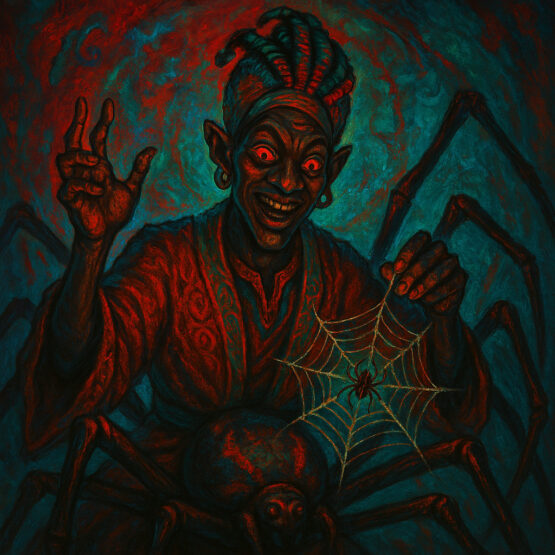
In the realm of Nyaméthra, where gods walk in shadow and stars whisper secrets to those who listen, there lived a spider—not just any spider, but Anansi, the Weaver of Stories, Trickster of the Threads, and Keeper of Forgotten Truths.
Long ago, the Clockwork Moon, a divine artifact that governed time itself, began to falter. Nights grew longer, days shorter, and the balance of the world teetered. The gods, proud and powerful, could not fix it—for the Moon’s gears were wound by stories, and the world had grown silent.
Anansi, ever the meddler, saw opportunity in the chaos.
“I will fix your moon,” he told the gods, “but I demand a price.”
“What price?” asked Asha the Dawnmother, her voice like the first light of morning.
“Your stories,” Anansi said, “all of them.”
The gods scoffed. “You cannot hold the tales of gods.”
Anansi only smiled. “Then let me try.”
They agreed, and Anansi spun a silver thread from the edge of the world to the Moon’s heart. He climbed for seven days and seven nights, whispering tales into the gears—stories of love and war, of betrayal and redemption, of mortals who defied fate and gods who wept.
With each tale, the gears turned. The Moon began to glow again.
But Anansi did not stop.
He spun his own stories into the mechanism—tales that had never been told, stories that bent truth and twisted fate. When he descended, the Moon ticked perfectly, but something had changed.
Now, every full moon, a new story is born in Nyaméthra. Some are blessings. Others, curses. All are Anansi’s.
And the gods? They keep their silence, for they know that in the web of fate, Anansi weaves the final thread.