Here a mythpunk chapter pulsing with cosmic energy, fused with biotech, chrono‑alchemy, and neon‑tidepunk vibes—keeping your concept’s soul while elevating it into full mythpunk
THE SONG OF LYSARA — A MYTHPUNK TALE
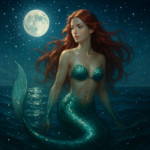
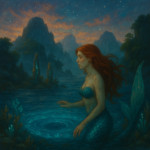
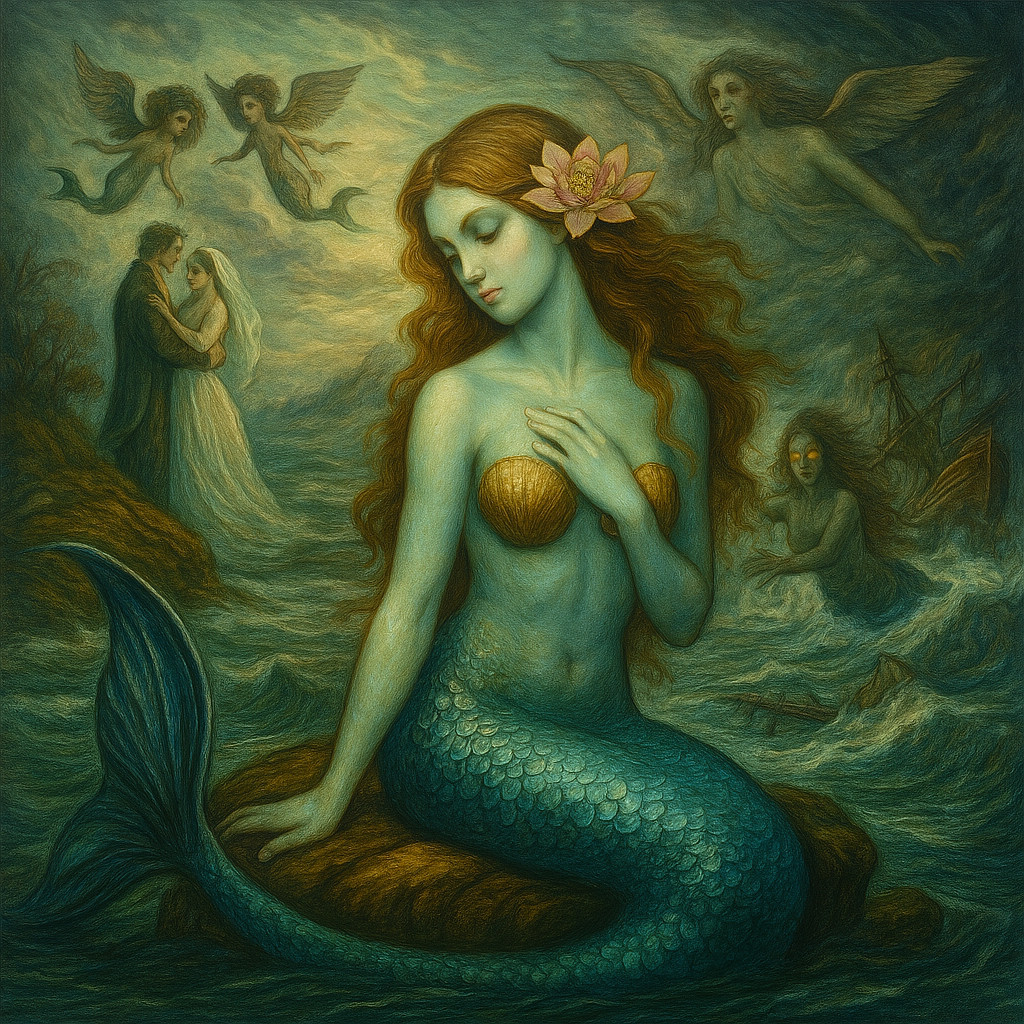
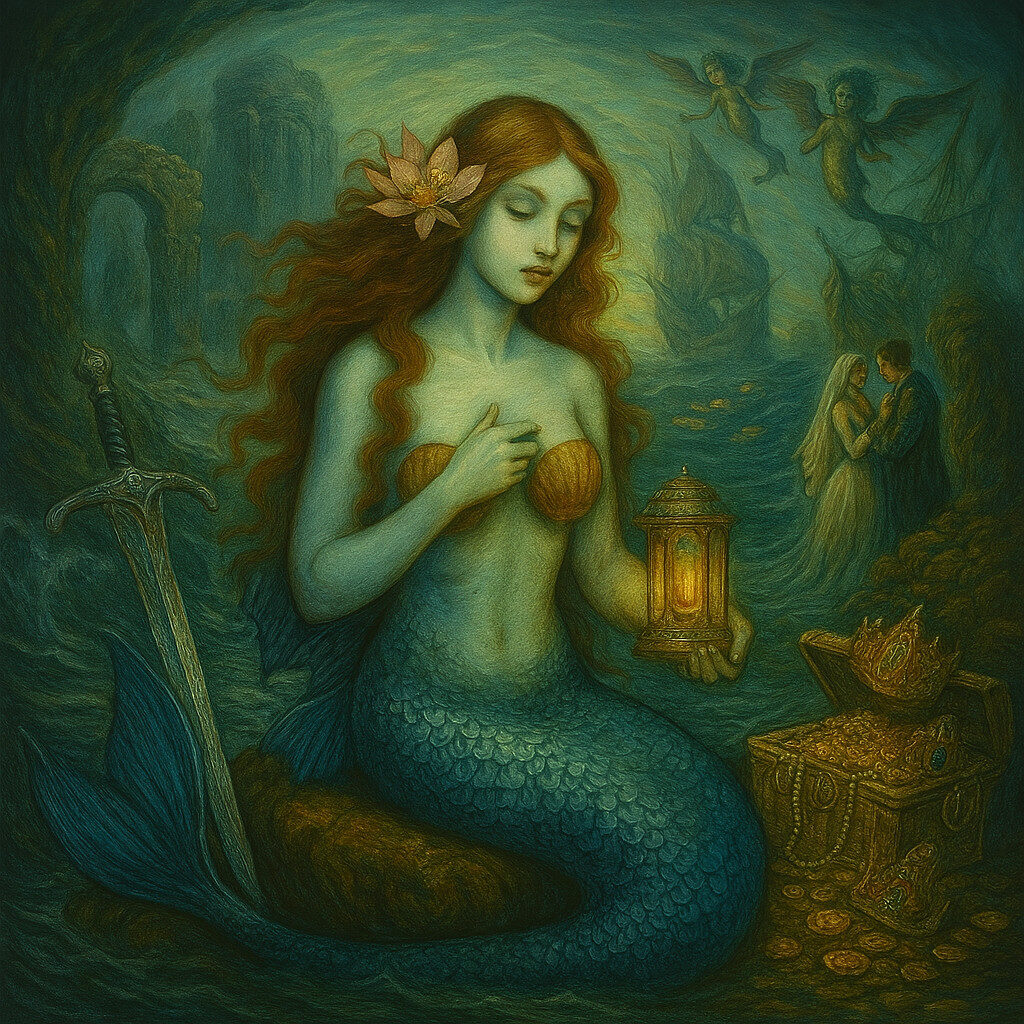
The Moonlit Sea was no longer the serene cradle of legends it once had been. Its sapphire waters shimmered with drifting hologlyphs — remnants of ancient Tideborn code that pulsed like constellations beneath the waves. Every ripple carried whispers of forgotten algorithms, every current hummed with the soft resonance of living circuitry. And at the heart of this neon‑lit oceanic labyrinth swam Lysara, last of the Tideborn and heir to a legacy older than the tides themselves.
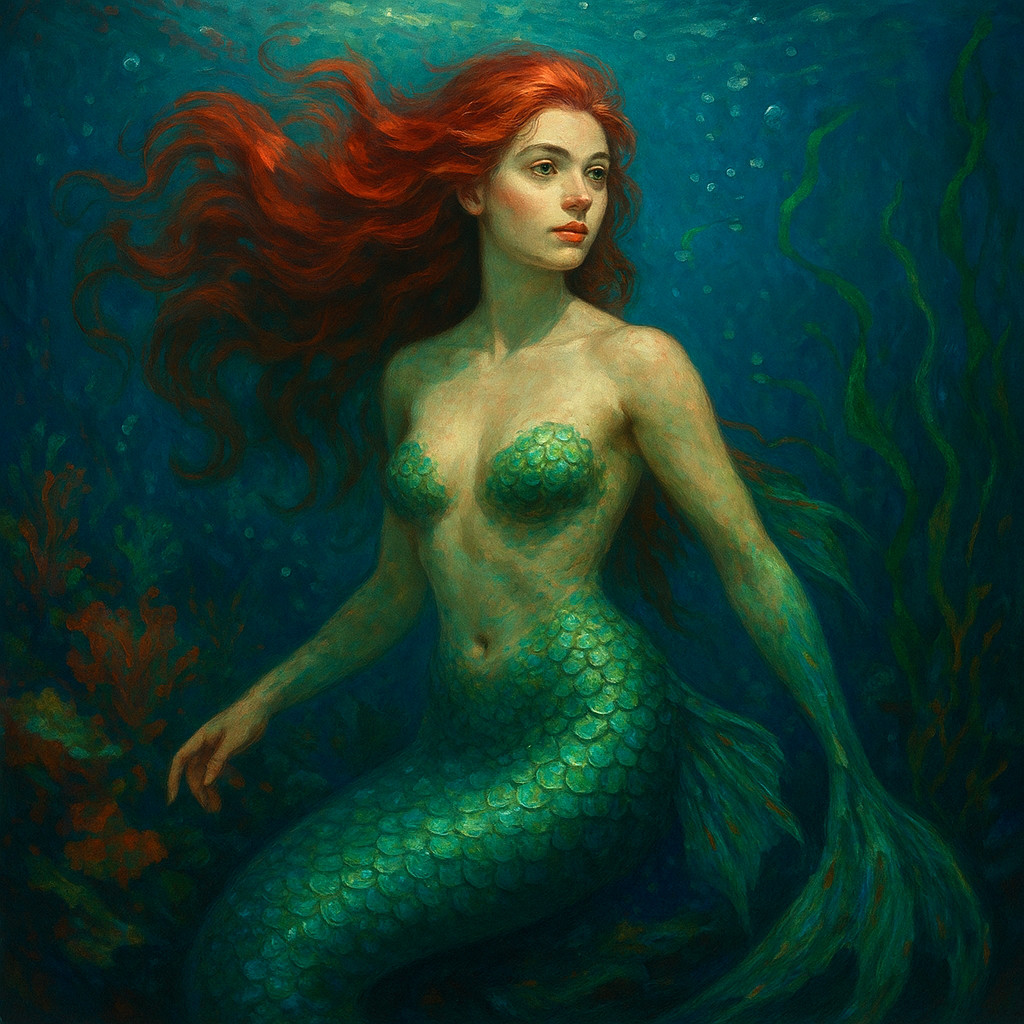
Her tail glimmered with emerald fractal scales, each one etched with micro‑runes that shifted like liquid circuitry. When she moved, the water around her vibrated with soft harmonics — the Song, her birthright, her burden. Her voice could soothe storms or fracture them, could lull the sea into stillness or awaken its fury. But beneath her beauty and grace lay a truth she had never dared confront: the Song was not merely magic. It was a key. A command. A weapon.
And something in the deep had begun to answer it.
For weeks, the Moonlit Sea had trembled with a pulse that did not belong. A shadow, vast and ancient, stirred in the Abyssal Trench — the Kraken of the Abyss, sealed long ago by the Tideborn through a ritual that fused myth with machine. The creature’s chains, woven from chrono‑steel and bound by the Pearl of Aeons, had begun to fracture. Time itself quivered around the breach.
Lysara felt the shift like a blade through her heart.
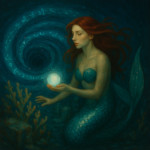
The coral spirits — once gentle, drifting echoes of Tideborn ancestors — now flickered with static and urgency. Their whispers guided her through the ruins of shipwrecks where barnacles clung to rusted star‑engines, through whirlpools that spiraled like malfunctioning portals, and toward the Mythic Isles, where the boundary between sea and sky bent like molten glass.
There she found her unlikely allies.
First was Captain Riven Thorn, the cursed pirate. His body was half‑flesh, half‑spectral code, flickering between existence and oblivion. His curse bound him to the sea, unable to die, unable to live — a glitch in fate itself. He sought redemption not for crimes committed, but for a betrayal he could no longer remember.
Next was Mirellia, the sea witch. Her soul was fractured into three temporal echoes, each one trapped in a different moment. She spoke in overlapping voices, her eyes shimmering with the glow of forbidden chronomancy. She alone understood the Pearl of Aeons — and feared it.
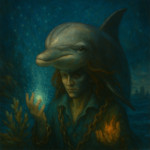
And finally, Koro, the riddle‑speaking dolphin whose mind had been augmented by Tideborn biotech. His words twisted like spirals of light, but beneath the riddles lay truths sharper than obsidian.
They undertook the Three Echoes of the Deep, trials made by the Tideborn to challenge seekers of the Pearl’s power.
The First Echo lay within the Vault of Tides, a submerged cathedral of shifting walls and living coral gears. There, Lysara faced her fear — not of the Kraken, but of herself. The Song responded to her emotions, amplifying them. If she faltered, the vault would collapse. If she mastered her voice, the path would open. She sang, and the vault obeyed.
The Second Echo awaited in the Mirror Reef, where bioluminescent shards reflected not her image, but her possible futures. In one, she ruled the seas as a goddess. In another, she drowned the world in sorrow. In a third, she vanished entirely. The reef demanded a choice — not of destiny, but of identity. Lysara chose humility, and the reef dissolved into light.
The Third Echo was the hardest: the Echo of Sacrifice. It manifested as a vision of the Kraken itself, chained and suffering. The Tideborn had sealed it not because it was evil, but because they feared its power. The echo forced Lysara to confront the truth: her ancestors had not been guardians. They had been tyrants.
And she was their last heir.
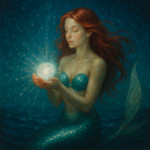
With the echoes unlocked, the path to the Trench of Silence opened — a void where sound, light, and time collapsed into stillness. There, suspended in the abyss, floated the Pearl of Aeons, glowing with the heartbeat of the world.
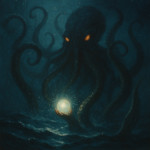
And coiled around it, awakening, was the Kraken.
Its eyes opened — vast, sorrowful, ancient. Not a monster. A prisoner.
Lysara felt the Song rise in her throat. The final trial was not a battle. It was a choice.
If she awakened the Pearl, she could seal the Kraken again — preserving her kind’s legacy, but repeating their sins.
If she shattered it, time would unravel, freeing the Kraken but erasing the Tideborn forever.
Her voice trembled.
Her allies waited.
The sea held its breath.
And Lysara sang — not the Song of the Tideborn, but a new melody, one born of rebellion, compassion, and mythpunk defiance.
A song that would rewrite the ocean’s fate.